Background
Open science practices are increasingly important for improving the transparency, reproducibility, and credibility of research. Across disciplines, researchers are expected to make their workflows, data, code, and results more findable, accessible, interoperable, and reusable where ethically and legally possible. These practices benefit not only the scientific community by enabling verification, reuse, and collaboration, but also society more broadly by increasing accountability, reducing research waste, and supporting evidence-based decision-making.
This workshop is designed for researchers, PhD candidates, students, and research support staff who want to understand and apply open science principles in their own work. It is particularly relevant for those working with research data and computational workflows who wish to make their projects more reproducible and easier to share, maintain, and reuse.
Learning contents
The workshop consists of a one-hour theoretical introduction followed by a two-hour practical session. In the theoretical part, participants will be introduced to the principles and motivations of open science, with a focus on transparency, reproducibility, and robust research practices. The practical part focuses on the BIDS Manager as a tool to support open and reproducible research workflows. After a short introduction to the tool and its role in structured data management, participants will spend approximately 1.5 hours in hands-on practical work. During this session, they will apply BIDS Manager to organize, document, and prepare research data in line with reproducible workflow principles.
Learning objectives
After attending the workshop, participants will be able to:
- Explain the basic principles of open science and why they matter for robust and reproducible research.
- Identify common barriers to reproducibility and strategies to address them. Recognize the value of structured data organization, documentation, and transparent workflows.
- Understand the purpose of the BIDS standard and the role of BIDS Manager in supporting reproducible research.
- Use BIDS Manager to begin organizing and documenting research data in a structured and reusable way.
- Reflect on how open science practices can be integrated into their own research workflows.
Prior knowledge
- No prior programming experience is required. The practical part will be beginner-friendly and will use the BIDS Manager graphical user interface.
- Participants should have a general interest in open science, reproducible workflows, and research data organization. Basic familiarity with research data is helpful, but not required.
- Although the workshop will include an introduction to BIDS and its main concepts, participants are encouraged to briefly explore the BIDS standard before the course.
Technical requirements
- Participants should bring their own laptop and have access to Eduroam or another stable internet connection.
- For the practical part, participants will use BIDS Manager. Participants are encouraged to install BIDS Manager before the workshop by following the installation instructions: https://ancplaboldenburg.github.io/bids_manager_documentation/installation.html
Recommended literature/content for preparation or further reading
No mandatory preparation is required.
Optional preparation/further reading:
-
BIDS Manager installation instructions: https://ancplaboldenburg.github.io/bids_manager_documentation/installation.html
-
BIDS standard: https://bids-specification.readthedocs.io/
The Lecturers
Dr. Cassie Shorthttps://uol.de/psychologie/statistik/cassie-short |
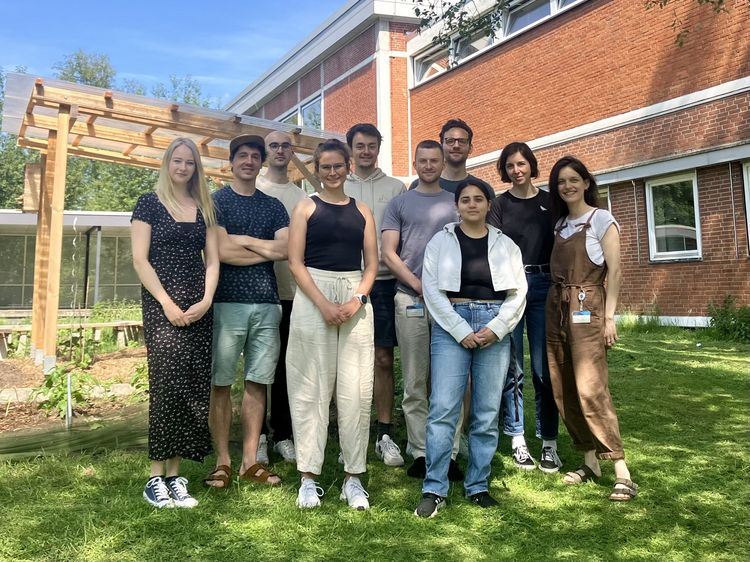
OSIG Teamhttps://uol.de/psychologie/open-science/osig |
 |
 |
Find out more about the Data Train lecturers on our website.
This event is organized by